
Hotel Check-In Times: The Complete Guide for Guests and Hosts

What Are Hotel Check-In Times, and Why Do They Exist?
You've been on a plane for six hours. You land, grab your bags, and head straight for the hotel — only to be told your room won't be ready for another two hours. It's one of the most common travel frustrations, and yet it's rarely explained well.
Hotel check-in times exist for a reason: they give housekeeping the window needed to clean, restock, and inspect every room after the previous guest checks out. Standard check-out is typically set around 11:00 AM, and check-in opens around 3:00 PM or 4:00 PM. That four-hour gap is intentional. For a property with 80 rooms, that's 80 rooms that need to be turned over, quality-checked, and prepared before a single new guest walks in.
Beyond logistics, check-in times also help hotels manage front desk flow. Without staggered arrivals, a midsize hotel could face a lobby full of guests all arriving at once, with nowhere near enough staff to handle them efficiently.
What Happens During Hotel Check-In?
The check-in process is more structured than most guests realize. Here's a breakdown of what typically happens behind the scenes and at the counter:
Identity and reservation verification. The first thing any front desk agent does is confirm your booking. Expect to show a valid ID and, in many countries, your reservation confirmation. Hotels may also ask for the card used to book, especially for prepaid reservations.
Payment and security deposit. Even if you've paid in advance, most hotels will place a temporary hold on your credit card. This covers potential incidental charges — room service, minibar, damages — and is released after check-out if everything is in order.
Room assignment. Based on your booking type, availability, and any preferences noted at the time of reservation, the front desk assigns your specific room. This is also when special requests (high floor, quiet side, accessibility features) get addressed. If occupancy is low, upgrades sometimes happen here.
Key card issuance. You'll receive a key card programmed for your room and, in some properties, specific areas like the pool, gym, or parking. Smart properties are now moving to digital keys sent directly to your smartphone.
Orientation. A good front desk agent will briefly walk you through the essentials: breakfast hours, Wi-Fi details, any ongoing maintenance, the nearest exit. Increasingly, hotels are handling this through digital welcome guides guests can consult on their own time.
How Flexible Are Check-In Times, Really?
This depends heavily on the property. A boutique hotel with 20 rooms running at full capacity has very little room to maneuver — every minute counts. A large resort with 300+ rooms and a dedicated early arrival block may be able to accommodate you fairly easily.
In general, flexibility correlates with three factors: occupancy rate, the size of the housekeeping team, and your status with the hotel (loyalty member vs. first-time guest).
That said, asking politely and early almost always improves your chances.
How to Get an Early Check-In or Late Check-Out
Early check-in
If your flight lands at 8:00 AM and check-in doesn't open until 3:00 PM, seven hours in a lobby is not ideal. Here's how to handle it:
Contact the hotel before you arrive. Call or email at least 24-48 hours in advance. Explain your situation and ask if early arrival is possible. Some hotels will flag your reservation and prioritize your room in the morning housekeeping schedule.
Book the room for the night before. It's the most reliable option if your schedule is inflexible. Yes, you pay for a night you won't fully use, but you're guaranteed a room the moment you arrive.
Ask about early check-in fees. Many hotels now offer guaranteed early check-in for an added charge — often between $20 and $50 depending on the property. It's a small price for the certainty of walking straight to your room.
Use luggage storage. If your room isn't ready, most front desks will hold your bags for free. You can explore the city or grab breakfast without dragging everything with you.
Late check-out
If your return flight is at 9:00 PM and standard check-out is 11:00 AM, you're looking at 10 hours to kill. A few options:
Ask at check-in, not the morning of. Hotels plan their housekeeping schedules daily. Asking early gives them a chance to work your room around a later turn.
Loyalty programs often include this as a perk. Hilton Honors, IHG One, Marriott Bonvoy — most major loyalty programs offer complimentary late check-out to higher-tier members, sometimes as late as 4:00 PM.
Day use rates. Some hotels sell extended room access by the hour. If you need to shower and rest before a late flight, it's often worth checking.
What Makes a Great Check-In Experience?
The best check-ins feel effortless. From the guest side, a few things make a real difference:
- Have your ID and confirmation number ready before you reach the desk
- Note any special requests when booking, not on arrival
- Be upfront about timing constraints — hotels deal with this constantly and have more flexibility than the policy suggests
From the hotel side, the differentiators are speed, personalization, and communication. Guests who know what to expect before they arrive — when the room will be ready, where to leave bags, what the house rules are — have a fundamentally better experience than those left guessing.
The New Face of Hotel Check-In
The hospitality industry has shifted meaningfully over the past few years. A few trends now shaping the check-in experience:
Mobile check-in. Most hotel apps let guests check in remotely before arrival, select a room, and receive a digital key. Some properties let you go from car to room without ever stopping at the front desk.
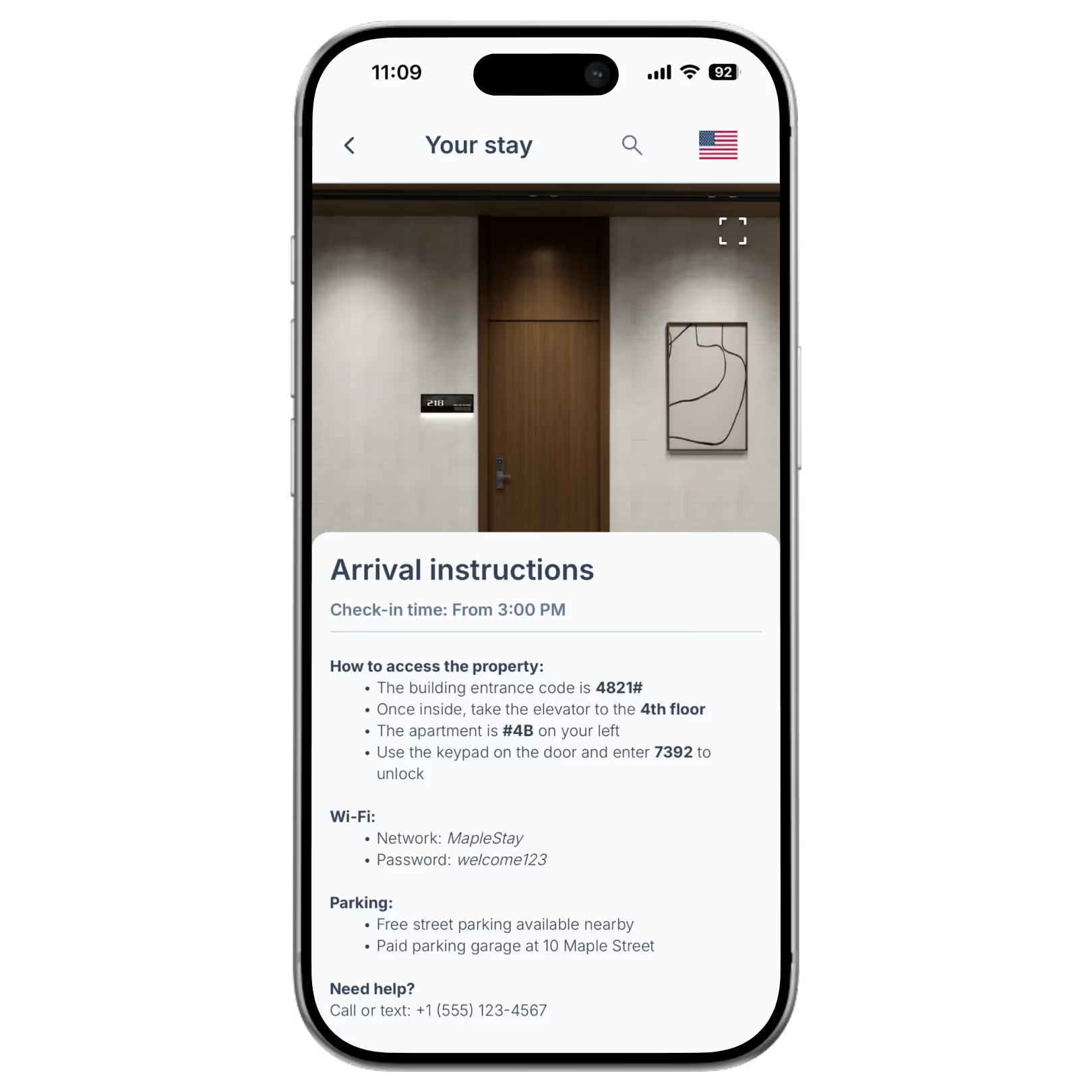
Digital welcome guides. Rather than a paper folder stuffed with leaflets, many hotels now share a digital guidebook — accessible via QR code or a link — that covers everything from Wi-Fi passwords to restaurant recommendations to service booking. Guests can consult it before, during, and after their stay.
Self-service kiosks. Airports pioneered this model, and hotels are following. Kiosks let guests handle the entire check-in process independently, reducing wait times and freeing up staff for more complex requests.
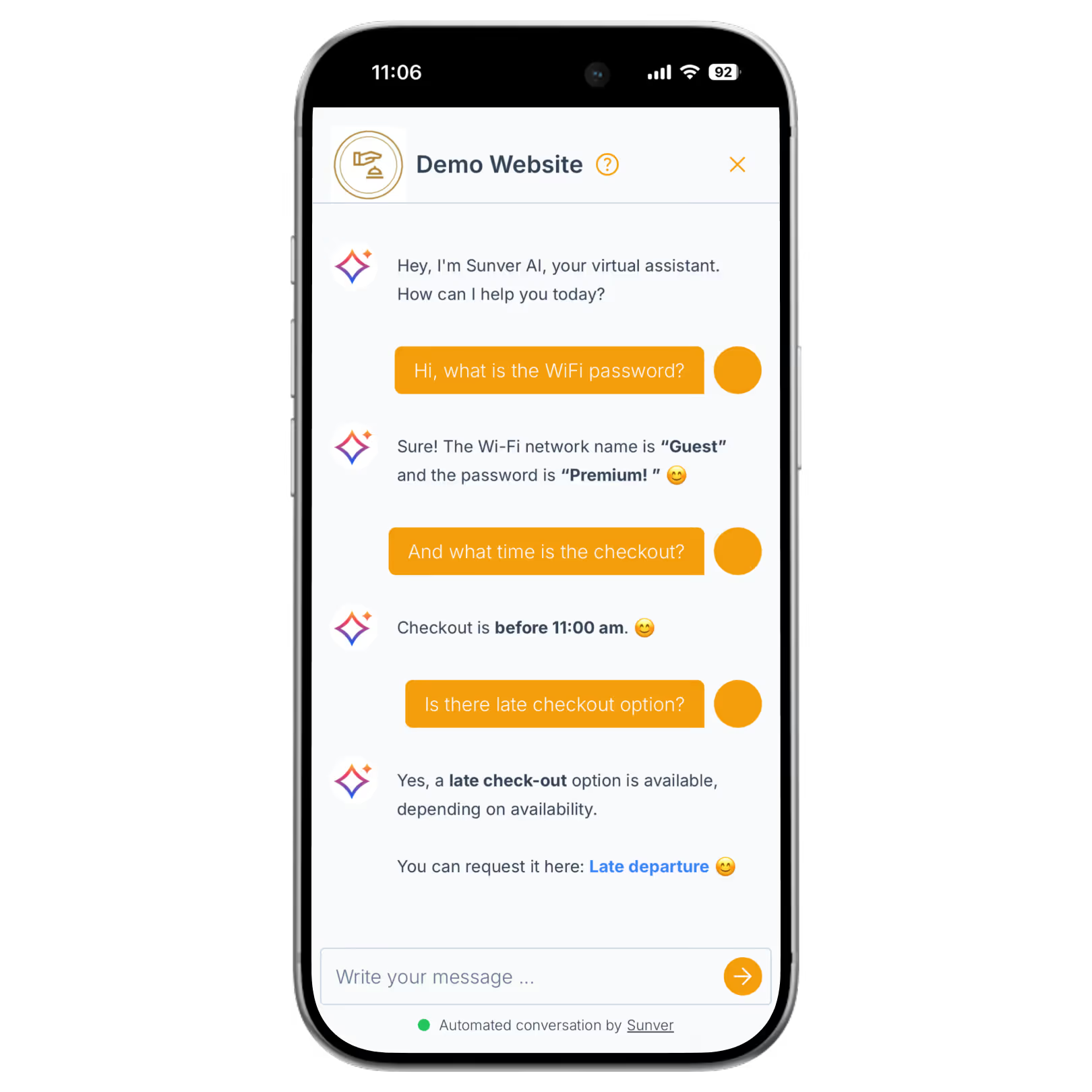
AI-powered guest assistants. Some properties have deployed AI chat tools trained on their own content. Guests can ask questions at midnight and get accurate, instant answers about check-out times, available services, or local directions — without waiting for a human response.
These aren't gimmicks. A guest who can check in from the taxi, access their room with their phone, find the Wi-Fi password in a 2-second search, and book a late check-out without calling the front desk is a guest who starts the stay on a good note.
Quick Reference: Hotel Check-In FAQs
What time is standard hotel check-in? Usually between 2:00 PM and 4:00 PM, though it varies by property.
Can I check in early? Sometimes. Call ahead, ask nicely, and consider paying for early access if the timing really matters.
Can I check out late? Often, especially if you ask in advance or have loyalty status. Expect a fee or restricted availability during peak periods.
What if my room isn't ready? Most hotels will hold your luggage and reach out when the room is prepared. Some offer complimentary access to amenities like the pool or gym in the meantime.
Can I check in online before arriving? Increasingly, yes — especially at major chains. Many properties now support mobile check-in through their app or a dedicated guest platform.
The gap between a stressful arrival and a smooth one often comes down to information. The more a guest knows before they walk through the door, the better the experience — for everyone. That's as true for a 10-room guesthouse as it is for a five-star city hotel.
Much more than a welcome guidebook
A web application accessible without download, via QR code or link, automatically translated into your guest’s language.
Frequently asked questions
Everything you need to know about Sunver.
What is Sunver?
Sunver is a solution that allows you to easily create your own digital welcome guidebook to simplify communication with your guests. It enhances the guest experience, saves you time every day, and helps you generate additional revenue. Setting up a guidebook is intuitive—similar to creating a Facebook profile.
How do I set up Sunver?
You can create your first guidebook directly from our website in just a few minutes and experience the simplicity of the solution for yourself. If you are a hospitality professional, our team also offers a full demo via video call, helping you with setup and customization.
How can I share my guidebook with guests?
There are two main ways to share your guidebook:
1. Send the link directly after booking or during the stay through your automated messages.Provide
2. QR code displays inside your accommodation so guests can scan and access the guidebook instantly.
You can also print your display for free from your Sunver dashboard or order physical QR code supports directly from our website.
Do my guests need to download anything?
No, your guests don’t need to download anything. Sunver runs as a web app, meaning it’s hosted online, loads quickly, and is instantly accessible. Thanks to automatic translation, the guidebook will open directly in the guest’s phone language.
Can I promote my additional services with Sunver?
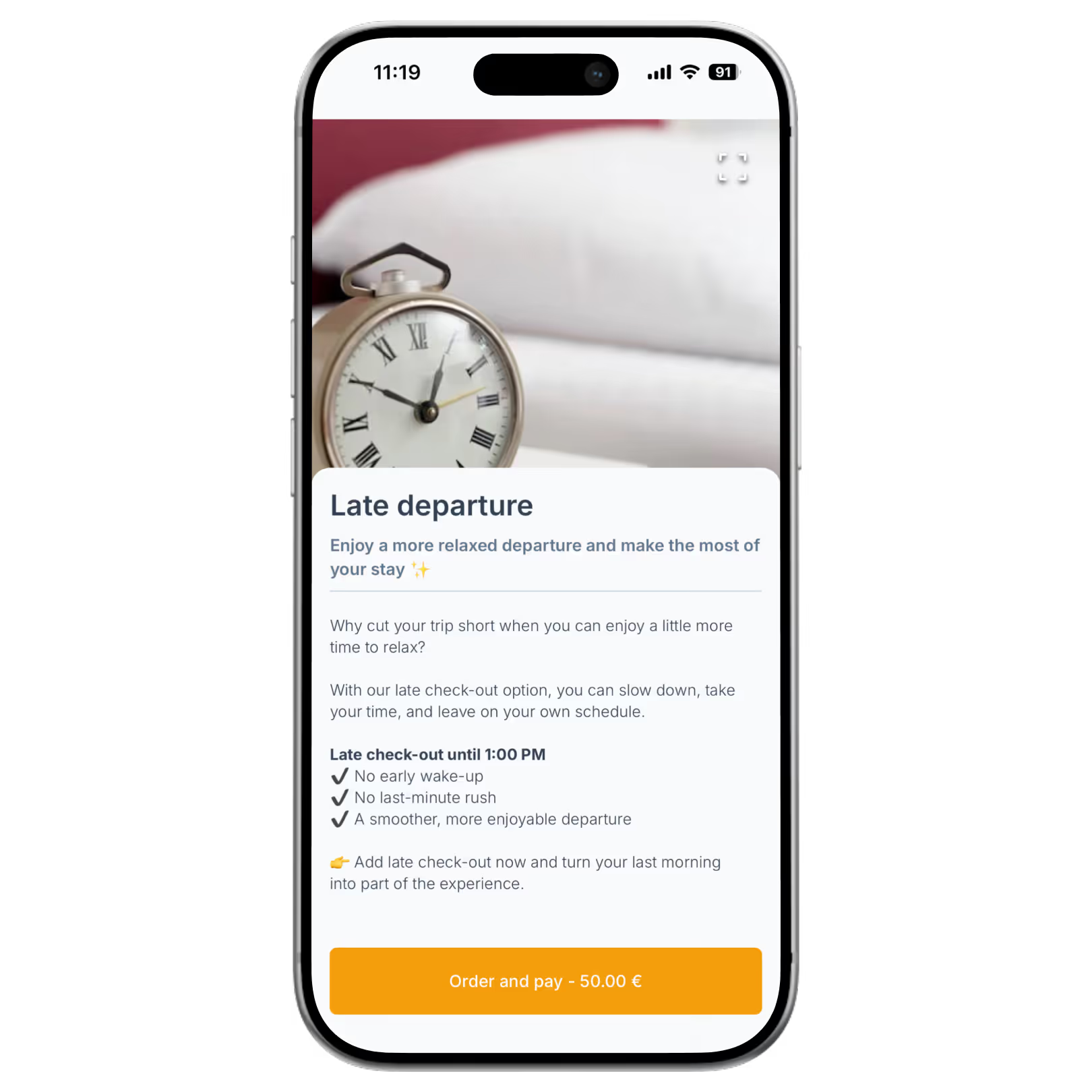
Yes, absolutely. With the guidebook modules, you can create a true digital shop and showcase your services, products, or exclusive offers. By connecting your Stripe account, you can accept payments directly without any commission taken by Sunver. Guests can pay in just one click from their smartphone.
The digital welcome guide your guests deserve
Give your guests a seamless experience — all your information, services, and recommendations, right at their fingertips.