
Hotel Concierge: Role, Responsibilities, and How Digital Tools Are Redefining the Position

What Is a Hotel Concierge and Why Does the Role Still Matter?
In an industry where guest satisfaction can make or break a reputation, the hotel concierge remains one of the most human and high-value positions in hospitality. They are not just someone who stands near the lobby with a smile. They are problem-solvers, local experts, relationship builders — and increasingly, the orchestrators of a seamless digital guest journey.
Yet the role is often misunderstood or underestimated, especially as hotels lean more heavily on automation. This article breaks down what a concierge actually does, how the position compares to front desk operations, and how the rise of digital concierge tools is reshaping what great service looks like today.
The Core Role: What Does a Hotel Concierge Do?
At its simplest, a hotel concierge is responsible for making a guest's stay as smooth, enjoyable, and memorable as possible — beyond what the standard check-in process covers.
Where a front desk agent manages the operational flow of arrivals, departures, and room assignments, the concierge focuses on the experiential layer. They step in when a guest has a need that goes beyond the basics, and they often anticipate those needs before the guest even thinks to ask.
Key responsibilities include:
Local expertise and recommendations: A great concierge knows the neighborhood better than most residents. When a guest asks for a good restaurant for a business dinner, or a family-friendly activity on a rainy afternoon, the concierge doesn't reach for a tourist brochure — they give a real, considered answer. That local intelligence is genuinely hard to replicate, and guests notice the difference.
Reservations and bookings: Restaurant reservations, taxi bookings, train tickets, theater seats, spa appointments — the concierge handles the logistics of a guest's time outside the hotel. This requires a maintained network of local contacts and partners, which takes years to build well.
Tour coordination: For leisure travelers especially, the concierge helps design experiences: day trips, guided tours, cultural visits. They match options to the guest's interests and travel style, often adding real value by securing access or rates the guest couldn't find independently.
Special requests and problem-solving: Late checkout needed? Surprise birthday setup? Prescription picked up during an early morning? The concierge is the person who handles the requests that fall outside every standard category. That adaptability — staying calm, creative, and resourceful under pressure — is what defines the best concierge professionals.
Concierge vs. Front Desk: A Clearer Distinction
The two roles are often conflated, particularly in smaller properties where one person handles both. But they serve different functions and require different skill sets.
Front DeskConcierge: Primary focusOperations and administrationGuest experience and personalizationKey tasksCheck-in/out, payments, room assignmentsBookings, recommendations, special requestsCore skillsOrganization, technical systems, time managementLocal knowledge, relationship-building, communicationGuest interactionTransactionalRelational
The distinction matters because conflating these roles leads to neither being done well. A front desk agent under pressure to process a queue of check-ins cannot simultaneously give thoughtful restaurant recommendations. Separating the functions — even partially — allows each to operate at full quality.
The Human Element: Why It Can't Be Fully Automated
There's a persistent assumption in hospitality circles that technology will eventually replace the concierge. The reality is more nuanced.
The skills that make a concierge exceptional — genuine warmth, contextual judgment, local relationships, creative problem-solving — are deeply human. When a guest is stressed after a delayed flight and needs more than a scripted response, the concierge absorbs that moment and turns it around. That is not something a chatbot does well.
That said, the concierge who ignores digital tools is leaving real efficiency on the table.
How Digital Concierge Tools Are Reshaping the Role
The rise of virtual and digital concierge platforms is not a threat to the role — it's an upgrade. When used thoughtfully, these tools take the repetitive, time-consuming parts of the job off the concierge's plate, freeing them to focus on complex, high-value interactions.
What digital concierge tools actually do
Pre-arrival engagement: Modern systems allow hotels to reach guests before they arrive — sharing local tips, asking about preferences, offering upgrades or add-ons. This gives the concierge context before the guest even walks through the door.
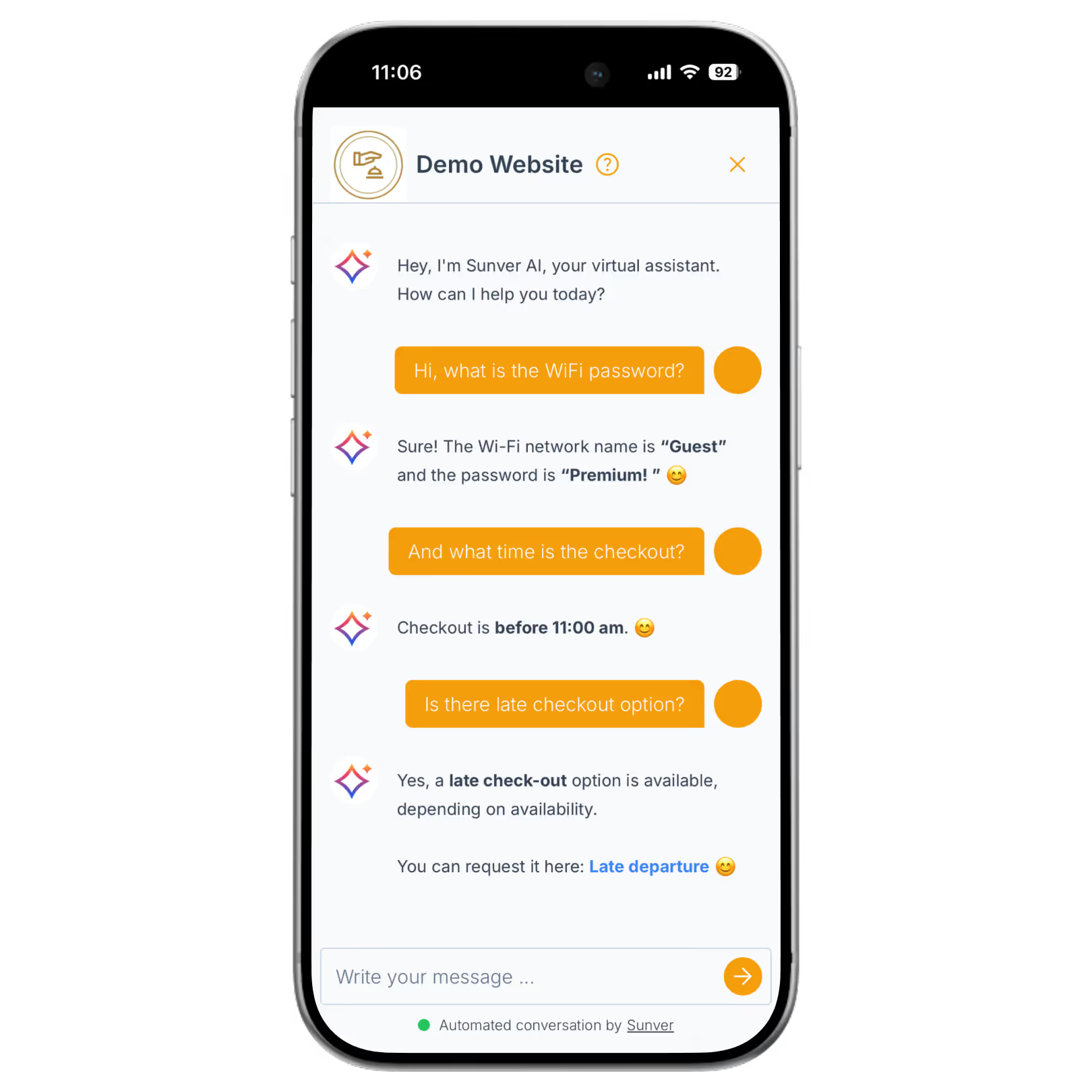
Real-time messaging and request handling: Instead of waiting in line at the desk or calling the front desk, guests can send requests directly through a mobile app or messaging platform. The concierge receives them instantly and can respond or coordinate accordingly.
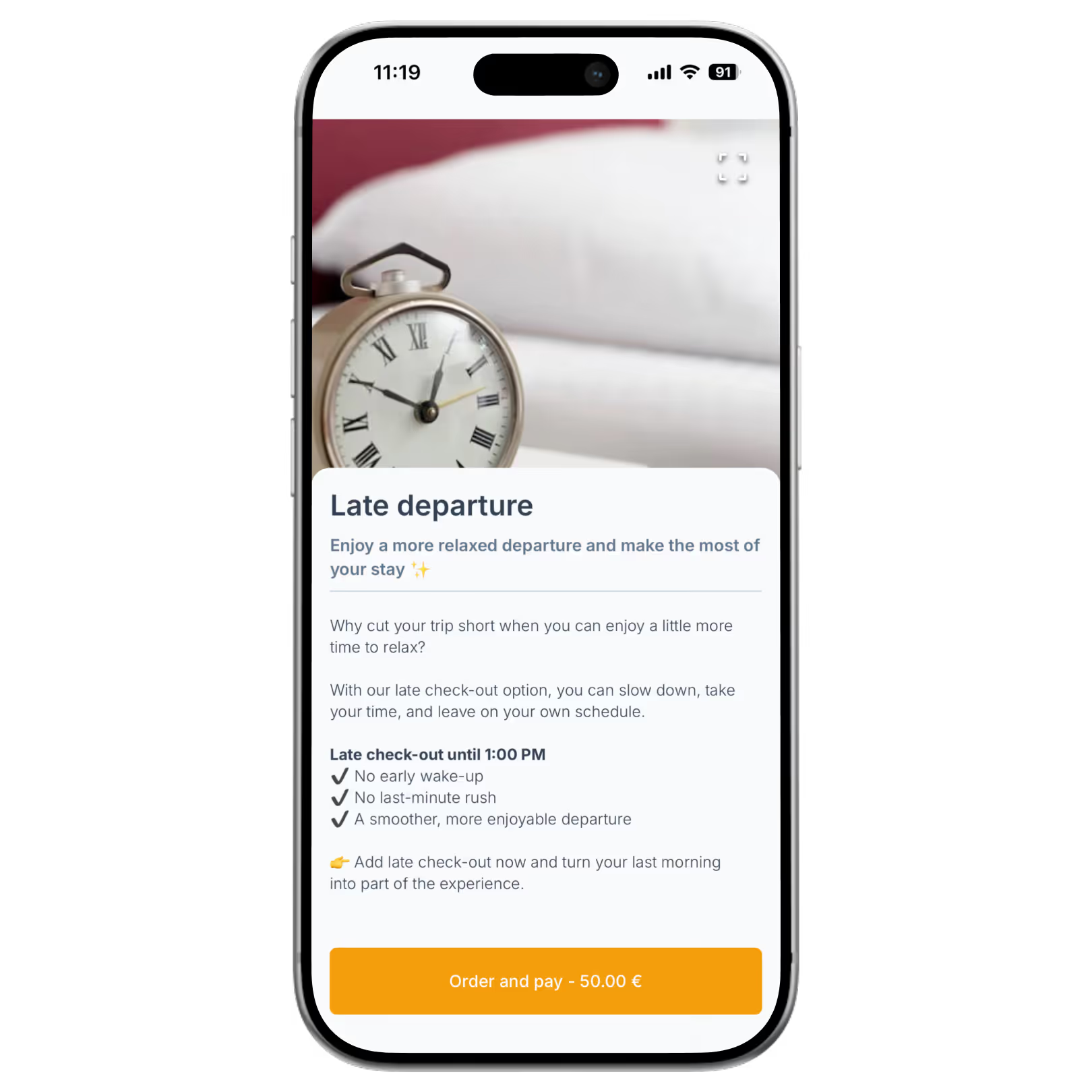
Upselling and personalized offers: Digital concierge tools can surface relevant offers based on guest profile data — a late checkout option for a tired business traveler, a couples' spa package for an anniversary stay. This creates revenue opportunities that would otherwise be missed.
Centralized guest data: When the concierge can see a guest's history, preferences, and past interactions in one place, they can personalize service without starting from scratch. That continuity is what makes a returning guest feel genuinely remembered — not just recognized.
The balance that works
The best concierge experiences today blend both: a digital layer that handles speed, accessibility, and personalization at scale, and a human layer that steps in for the moments that genuinely matter. Think of the digital tools as the infrastructure, and the concierge as the expert who makes it meaningful.
Practical Tips for Hotels Looking to Strengthen Concierge Service
Whether you run a boutique property with one concierge or a large hotel with a full team, a few principles consistently make the difference:
- Invest in local knowledge continuously. The best concierges stay current — new restaurant openings, seasonal events, changes in the neighborhood. That relevance is the product they're selling.
- Give concierges access to guest data. A concierge operating blind — without knowing whether a guest is on their third stay or their first, whether they've flagged dietary restrictions, whether they're traveling for work or leisure — cannot personalize effectively.
- Integrate your tools. A digital concierge platform that doesn't communicate with your PMS creates friction, not efficiency. Integration is what makes the system feel seamless from the guest's perspective.
- Train for judgment, not just procedure. Scripts and SOPs are useful, but concierge work often requires improvisation. The best training builds confidence in decision-making, not just compliance with rules.
FAQs: Hotel Concierge
Do all hotels need a concierge?
Not necessarily in the traditional sense, but every hotel needs someone — or a system — capable of handling personalized guest requests. For smaller properties, a well-configured digital concierge tool combined with a trained front desk team can cover much of this ground effectively.
What qualifications does a hotel concierge need?
Formal requirements vary by market, but the most valued qualities are: deep local knowledge, strong interpersonal skills, multilingual ability, a broad network of local contacts, and the capacity to stay composed under pressure. Experience in hospitality or customer service roles is typically a stronger indicator than specific credentials.
How does a digital concierge work?
A digital concierge is software — often delivered via a guest-facing mobile app or web portal — that allows guests to make requests, access information, and communicate with hotel staff without visiting the front desk. It handles routine tasks automatically and routes complex requests to a human team member.
Can technology replace the hotel concierge?
It can replace the transactional parts of the role. It cannot replace judgment, warmth, or the kind of resourceful problem-solving that defines exceptional concierge service. The best outcome is a collaboration between both.
The hotel concierge has always been at the center of what makes a stay memorable. As the tools available to them evolve, the role isn't disappearing — it's becoming more focused, more strategic, and more capable of delivering the kind of personalized experience that keeps guests coming back.
Much more than a welcome guidebook
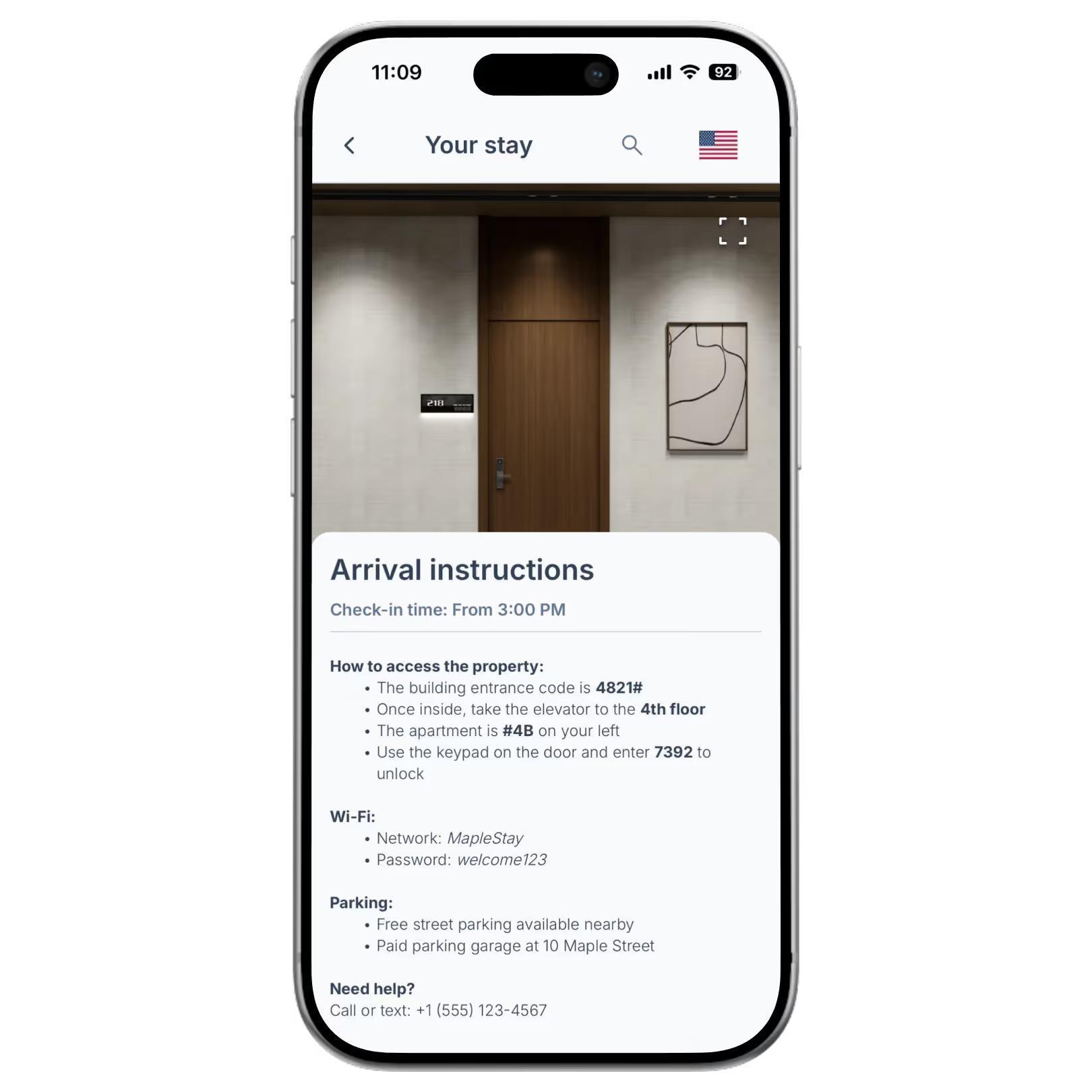
A web application accessible without download, via QR code or link, automatically translated into your guest’s language.
Frequently asked questions
Everything you need to know about Sunver.
What is Sunver?
Sunver is a solution that allows you to easily create your own digital welcome guidebook to simplify communication with your guests. It enhances the guest experience, saves you time every day, and helps you generate additional revenue. Setting up a guidebook is intuitive—similar to creating a Facebook profile.
How do I set up Sunver?
You can create your first guidebook directly from our website in just a few minutes and experience the simplicity of the solution for yourself. If you are a hospitality professional, our team also offers a full demo via video call, helping you with setup and customization.
How can I share my guidebook with guests?
There are two main ways to share your guidebook:
1. Send the link directly after booking or during the stay through your automated messages.Provide
2. QR code displays inside your accommodation so guests can scan and access the guidebook instantly.
You can also print your display for free from your Sunver dashboard or order physical QR code supports directly from our website.
Do my guests need to download anything?
No, your guests don’t need to download anything. Sunver runs as a web app, meaning it’s hosted online, loads quickly, and is instantly accessible. Thanks to automatic translation, the guidebook will open directly in the guest’s phone language.
Can I promote my additional services with Sunver?
Yes, absolutely. With the guidebook modules, you can create a true digital shop and showcase your services, products, or exclusive offers. By connecting your Stripe account, you can accept payments directly without any commission taken by Sunver. Guests can pay in just one click from their smartphone.
The digital welcome guide your guests deserve
Give your guests a seamless experience — all your information, services, and recommendations, right at their fingertips.