
Hotel Revenue Management: A Complete Guide to Maximizing Your Property's Income

Revenue management sits at the heart of every well-run hotel. Yet for many operators — particularly independent properties — it remains more of an instinct than a system. The goal of this guide is to change that: to lay out, clearly and practically, where hotel revenue actually comes from, what shapes it, and what you can do to increase it.
What hotel revenue really means
Hotel revenue is the total income a property generates across all its activities: room bookings, food and beverage, events, spa services, parking, and anything else guests pay for during their stay. It's the top-line number before costs, and it determines whether a hotel can cover its expenses, invest in improvements, and turn a profit.
Most operators are familiar with two key metrics: total revenue and RevPAR (Revenue Per Available Room). RevPAR is calculated by multiplying occupancy rate by the average daily rate (ADR), and it's arguably the most widely used indicator of room revenue performance in the industry. But focusing on RevPAR alone misses a significant portion of what a hotel can earn.
The main sources of hotel revenue
Room revenue
Accommodation remains by far the largest contributor, typically representing 60 to 70% of total revenue for full-service hotels. Room rates vary based on room type, floor, view, season, and how far in advance a guest books. The difference between a hotel that consistently fills rooms at strong rates and one that undercharges or leaves inventory unsold often comes down to how actively the property manages pricing.
Food and beverage
Restaurant, bar, and room service revenue can be substantial — especially for city-center business hotels or resort properties where guests spend multiple nights. The challenge is that F&B comes with high operating costs, so profitability depends on menu engineering, staffing efficiency, and volume. Some hotels operate their F&B as a genuine profit center; others treat it primarily as a guest amenity.
Meetings and events
Hosting conferences, weddings, seminars, and corporate retreats can generate significant revenue with relatively high margins — especially when room blocks and catering are bundled. Hotels with well-equipped event spaces in strategic locations (near airports, convention centers, or business districts) often see event revenue rival their room revenue during peak conference season.
Ancillary services
Parking, spa treatments, laundry, shuttle services, in-room entertainment, and early check-in or late check-out fees collectively form what's known as ancillary or "other" revenue. This category is frequently underestimated. For a 100-room hotel with strong upsell practices, ancillary revenue can easily add tens of thousands of dollars per year — often with low incremental cost.
What drives hotel revenue up or down
Seasonality
Demand in hospitality fluctuates by the calendar. A ski resort fills in January and empties in July. A beach property does the reverse. City hotels often see weekday corporate demand drop off entirely on weekends. Understanding your seasonal pattern — including shoulder periods and off-peak troughs — is the foundation of smart pricing.
Location and competitive set
Location shapes demand ceiling. A hotel near a major airport, tourist attraction, or convention center operates in a fundamentally different market than one on the outskirts of a secondary city. More important than location in isolation, though, is how a property performs relative to its competitive set — the group of comparable hotels it competes with for the same guests.
Market demand and external factors
Political stability, economic cycles, currency fluctuations, and major events all affect how many people travel and what they're willing to spend. The COVID years were an extreme example, but even ordinary recessions, airline strikes, or changes in corporate travel policies can shift demand meaningfully. Hotels that track booking pace and leading indicators can adjust faster than those reacting after the fact.
Consumer behavior
Today's traveler researches extensively, compares prices across platforms, and expects a seamless digital experience from first search to checkout. Properties that provide clear, rich information and make booking easy capture demand that less attentive competitors lose. Online reviews now function as social proof that directly influences where guests choose to stay — and how much they'll pay.
Strategies that actually move the needle
Dynamic pricing
Static rack rates belong to a previous era of hospitality. Dynamic pricing means adjusting room rates in near real-time based on demand signals: occupancy levels, competitor rates, local events, and booking pace. Most channel managers and PMS platforms now support some form of rate automation, though smaller properties can start simply by reviewing and updating rates weekly based on their occupancy calendar.
A practical example: a boutique hotel in a city hosting a major trade fair should price those three nights significantly higher than the surrounding weeks. Without a dynamic approach, it either fills at rates that leave money on the table or holds high rates and suffers avoidable vacancy.
Upselling and cross-selling
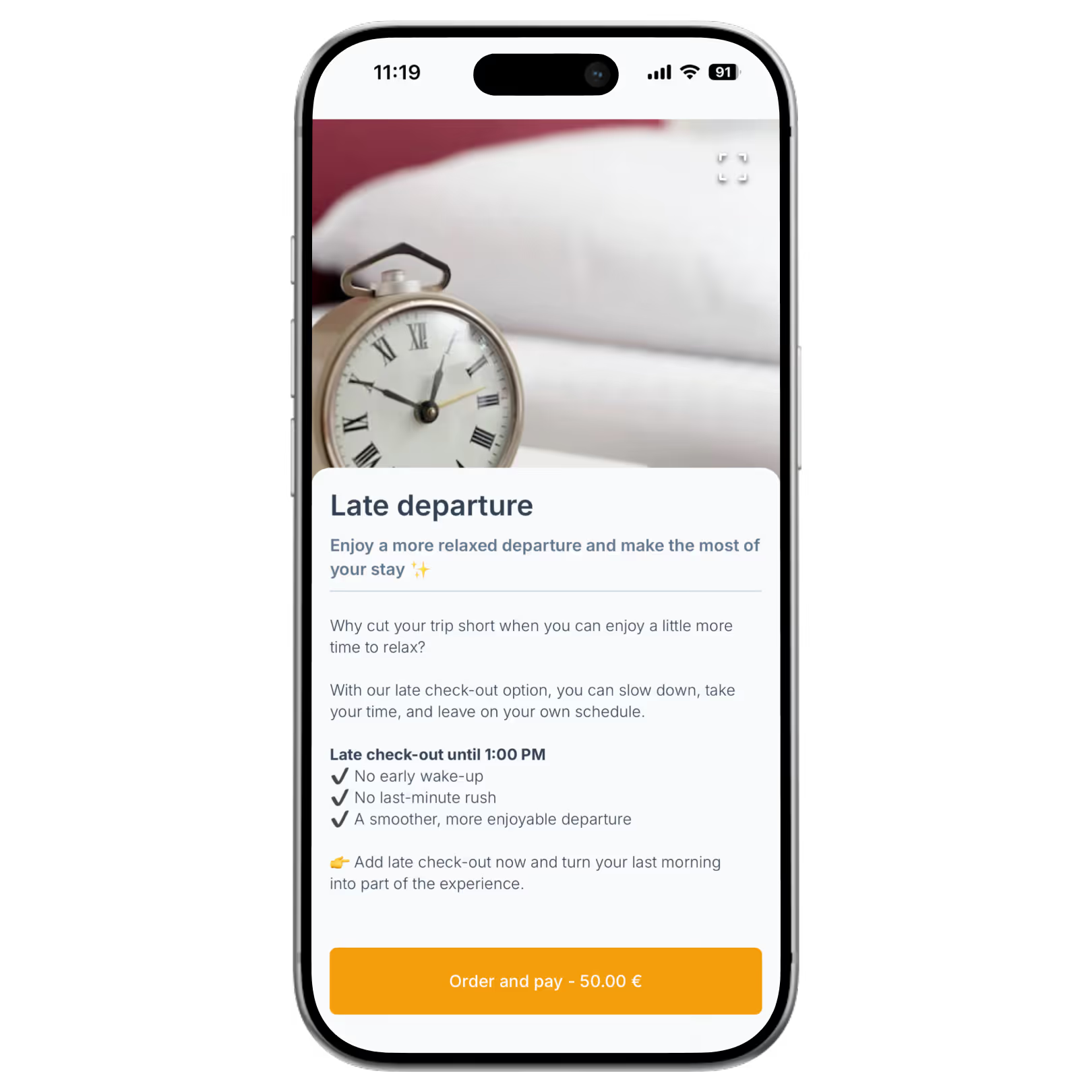
Upselling is the practice of offering guests a better version of what they've already chosen — a room upgrade, a suite, a higher floor. Cross-selling is offering complementary services alongside the existing booking: breakfast packages, spa credits, late checkout, transfers.
Both require the right timing and the right message. Pre-arrival communication — a well-crafted email sent 48 to 72 hours before check-in — is one of the most effective moments to present these offers. At that point, guests are engaged and planning their trip. A relevant, personalized offer converts far better than a generic one made at the front desk.
Direct booking and distribution management
Every booking made through an OTA costs between 15 and 25% in commission. Shifting even a portion of that volume to direct channels — the hotel's own website, phone, or loyalty program — meaningfully improves margin. This requires investment in the booking experience and, increasingly, in digital marketing to make the hotel discoverable outside of Booking.com or Expedia.
Distribution management also means choosing which channels to prioritize based on their net contribution, not just their gross volume.
Guest experience as a revenue driver
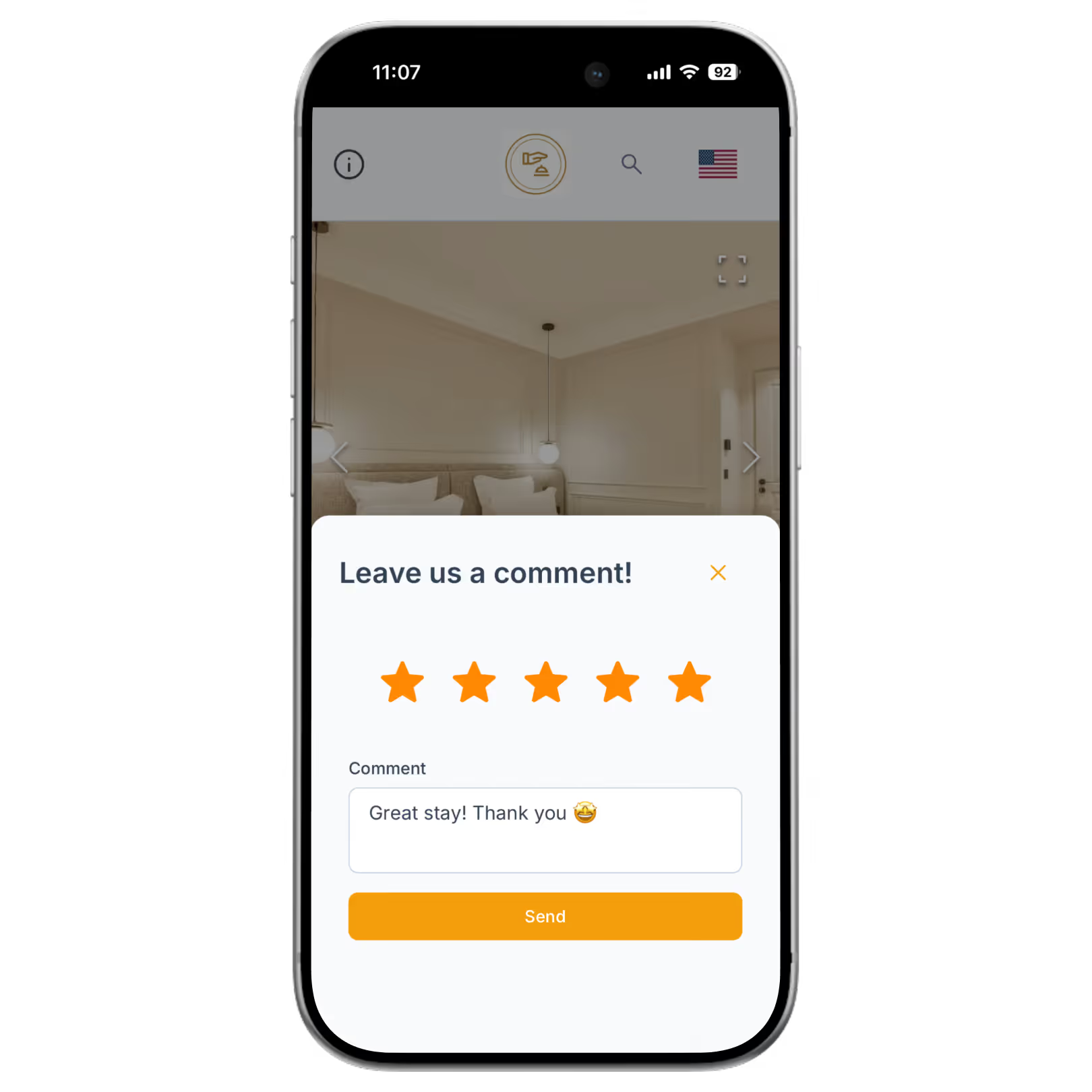
There's a less obvious but very real connection between experience quality and revenue. Hotels with consistently strong reviews command rate premiums — guests will pay more for a property they trust. High satisfaction also drives repeat stays, which cost a fraction of the acquisition expense of a new guest.
Reducing friction in the guest journey — making information easy to find, eliminating unnecessary waits, resolving problems quickly — directly affects whether guests leave happy, whether they leave a positive review, and whether they return.
Loyalty and repeat business
The economics of loyalty are compelling: a returning guest costs far less to acquire than a new one and tends to spend more. Formal loyalty programs work well at scale (large chains have the infrastructure and reward ecosystem to make them stick), but independent hotels can build informal versions through personalized communication, recognition of returning guests, and consistent quality.
Key takeaways
Revenue management isn't a department — it's a mindset. The most profitable hotels treat every interaction with a guest as both an opportunity to deliver value and an opportunity to generate revenue. That means understanding where income comes from across the full property, tracking what influences demand, and actively managing pricing, distribution, and upsell at every stage of the guest journey.
The tools to do this have never been more accessible. Many of them now integrate directly into standard hotel tech stacks. The gap between well-managed and poorly-managed properties isn't access to information — it's the discipline to act on it.
FAQ
What is the difference between RevPAR and TRevPAR? RevPAR measures room revenue per available room. TRevPAR (Total Revenue Per Available Room) captures all revenue streams — rooms, F&B, spa, events, etc. — giving a more complete picture of a property's earning performance.
At what point should a hotel invest in revenue management software? Most dedicated revenue management systems make economic sense once a property reaches 30 to 50 rooms. Below that threshold, structured manual processes combined with a good channel manager can achieve much of the same result.
How much revenue comes from upsells on average? Industry figures vary, but properties with active upsell programs — particularly pre-arrival digital offers — typically generate between 5 and 15% of additional revenue per booking, with strong variance based on property type and offer quality.
Much more than a welcome guidebook
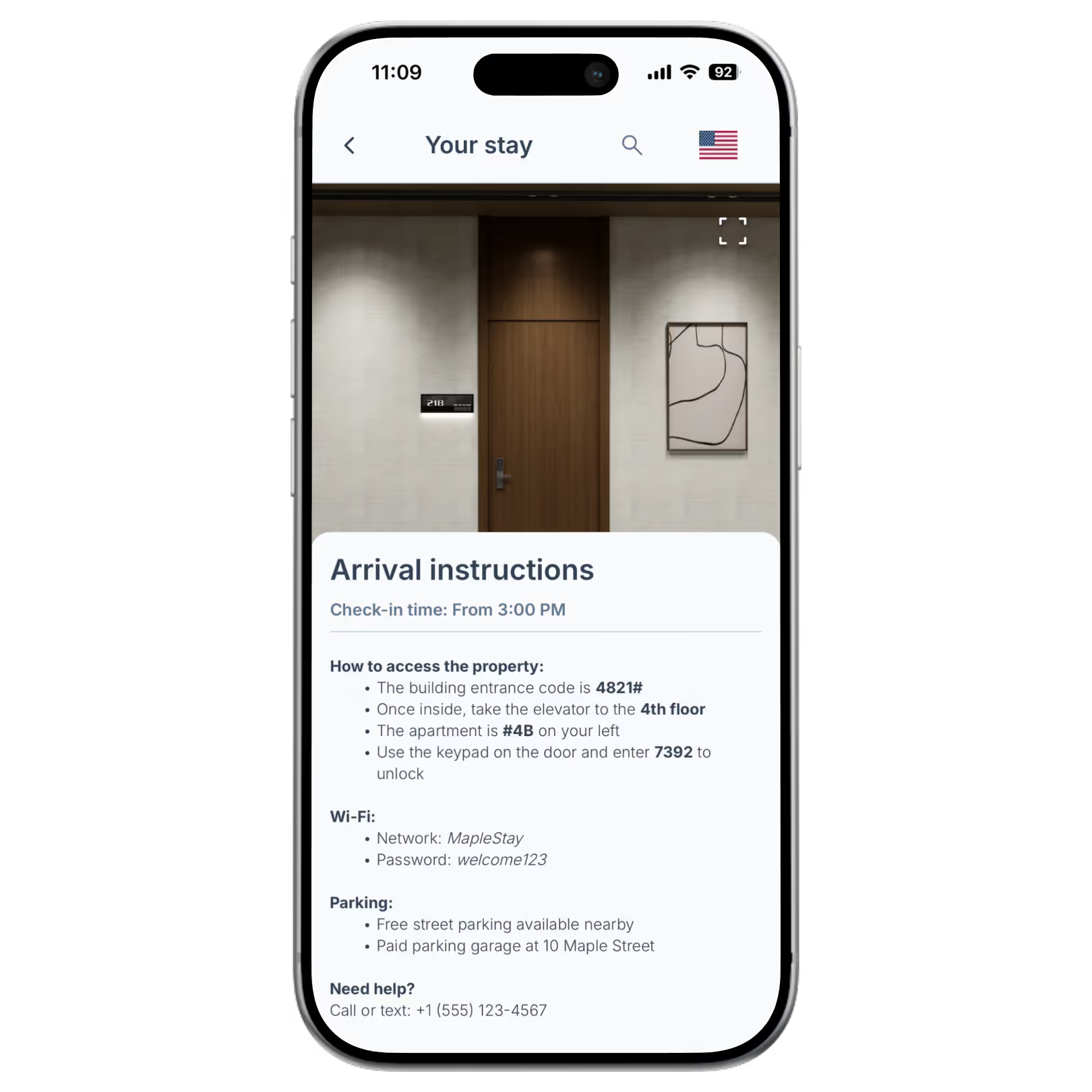
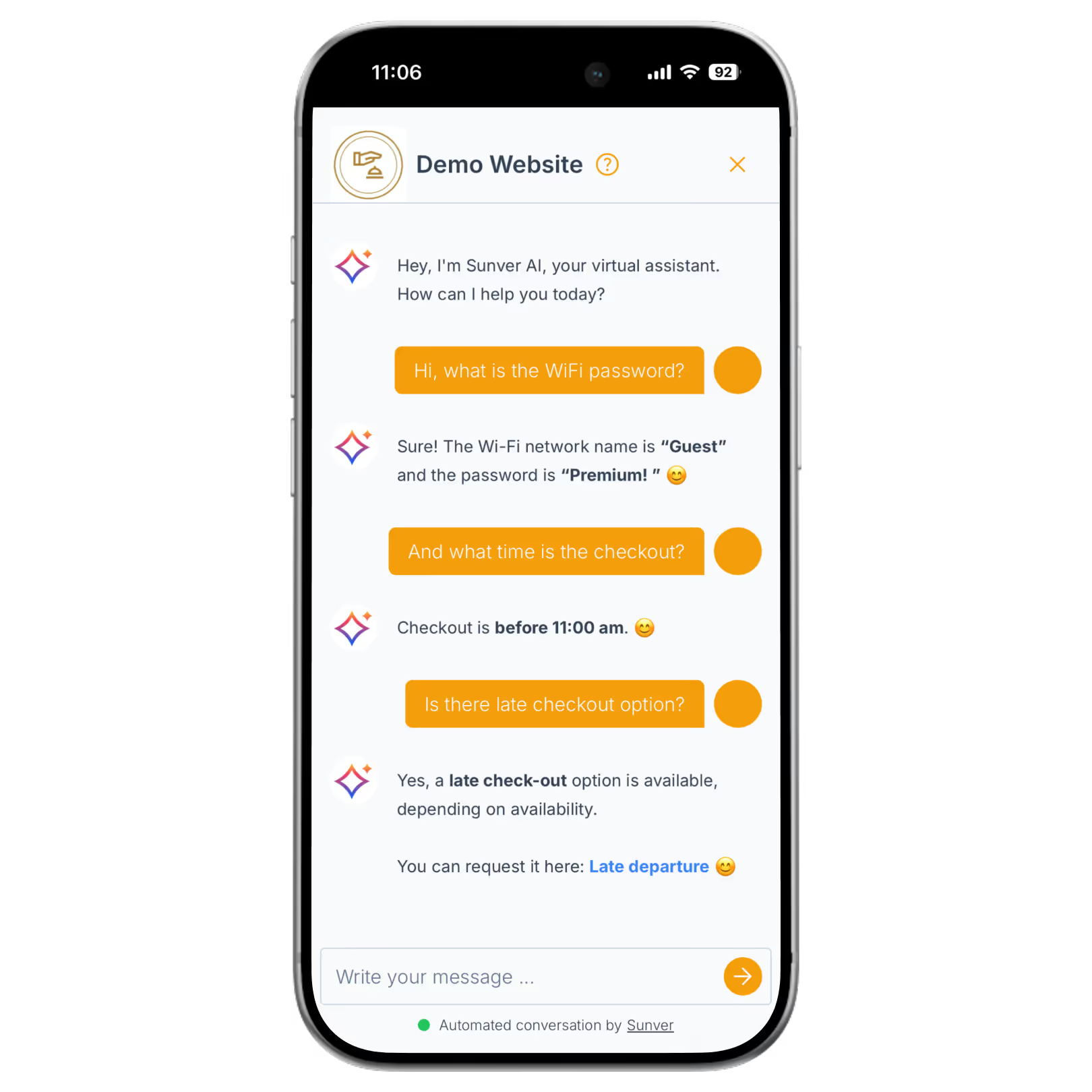
A web application accessible without download, via QR code or link, automatically translated into your guest’s language.
Frequently asked questions
Everything you need to know about Sunver.
What is Sunver?
Sunver is a solution that allows you to easily create your own digital welcome guidebook to simplify communication with your guests. It enhances the guest experience, saves you time every day, and helps you generate additional revenue. Setting up a guidebook is intuitive—similar to creating a Facebook profile.
How do I set up Sunver?
You can create your first guidebook directly from our website in just a few minutes and experience the simplicity of the solution for yourself. If you are a hospitality professional, our team also offers a full demo via video call, helping you with setup and customization.
How can I share my guidebook with guests?
There are two main ways to share your guidebook:
1. Send the link directly after booking or during the stay through your automated messages.Provide
2. QR code displays inside your accommodation so guests can scan and access the guidebook instantly.
You can also print your display for free from your Sunver dashboard or order physical QR code supports directly from our website.
Do my guests need to download anything?
No, your guests don’t need to download anything. Sunver runs as a web app, meaning it’s hosted online, loads quickly, and is instantly accessible. Thanks to automatic translation, the guidebook will open directly in the guest’s phone language.
Can I promote my additional services with Sunver?
Yes, absolutely. With the guidebook modules, you can create a true digital shop and showcase your services, products, or exclusive offers. By connecting your Stripe account, you can accept payments directly without any commission taken by Sunver. Guests can pay in just one click from their smartphone.
The digital welcome guide your guests deserve
Give your guests a seamless experience — all your information, services, and recommendations, right at their fingertips.