
Why don’t your guests read your welcome guide?

The welcome guide is meant to make the stay easier, reduce guest inquiries and improve the guest experience. Yet one recurring observation is shared by many hoteliers: guests don’t read the welcome guide, or only partially.
And this isn’t necessarily a content issue. In most cases, the guide is complete, clear and sometimes even very well designed. It’s simply not consulted at the right time, nor in a format that truly fits guest behavior.
Here’s why:
The welcome guide is sent too late
This is the most common mistake.
Many essential pieces of information are sent after arrival, when guests are already:
- on the move,
- tired,
- focused on something else.
Yet guests look for certain information before they even arrive:
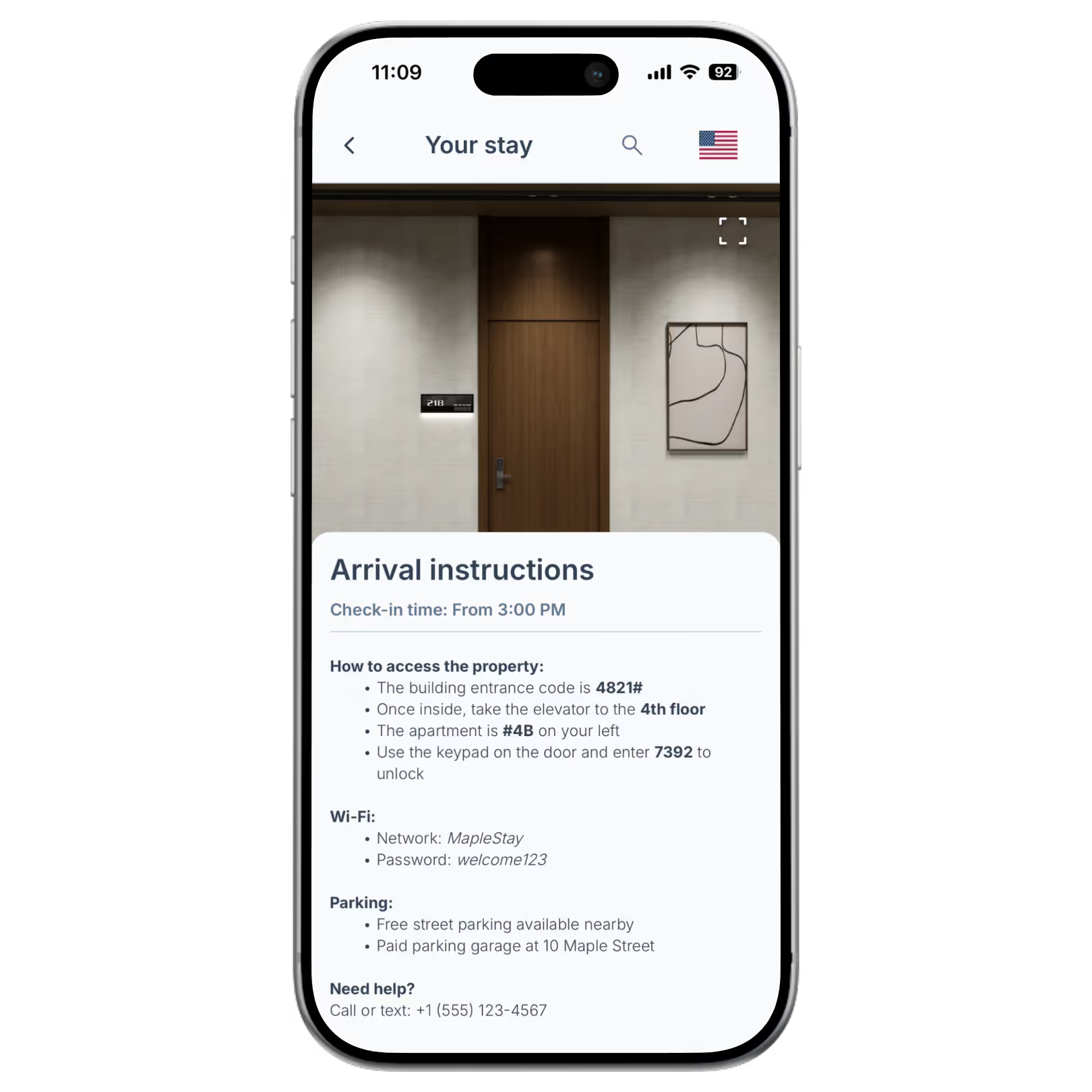
- how to access the property,
- whether early check-in is possible,
- available amenities,
- what there is to do nearby.
When the guide arrives too late, it becomes something to “read later”… and is often forgotten.
The right timing is not after arrival, but before the stay begins.
The format is not adapted to real guest usage
A welcome guide can be “well done” in terms of content… and still poorly designed in terms of format.
Guests:
- mostly consult information on their smartphone,
- want an answer within seconds.
Long, linear or static formats (PDFs, long scrolling documents with no structure, generic links) quickly discourage reading.
A good welcome guide is not a document to read, but an interface to use.
Guests have a question, they don’t want to “read everything”
A frequently overlooked point: most guests don’t open a welcome guide to browse it.
They open it to solve one specific problem.
Examples:
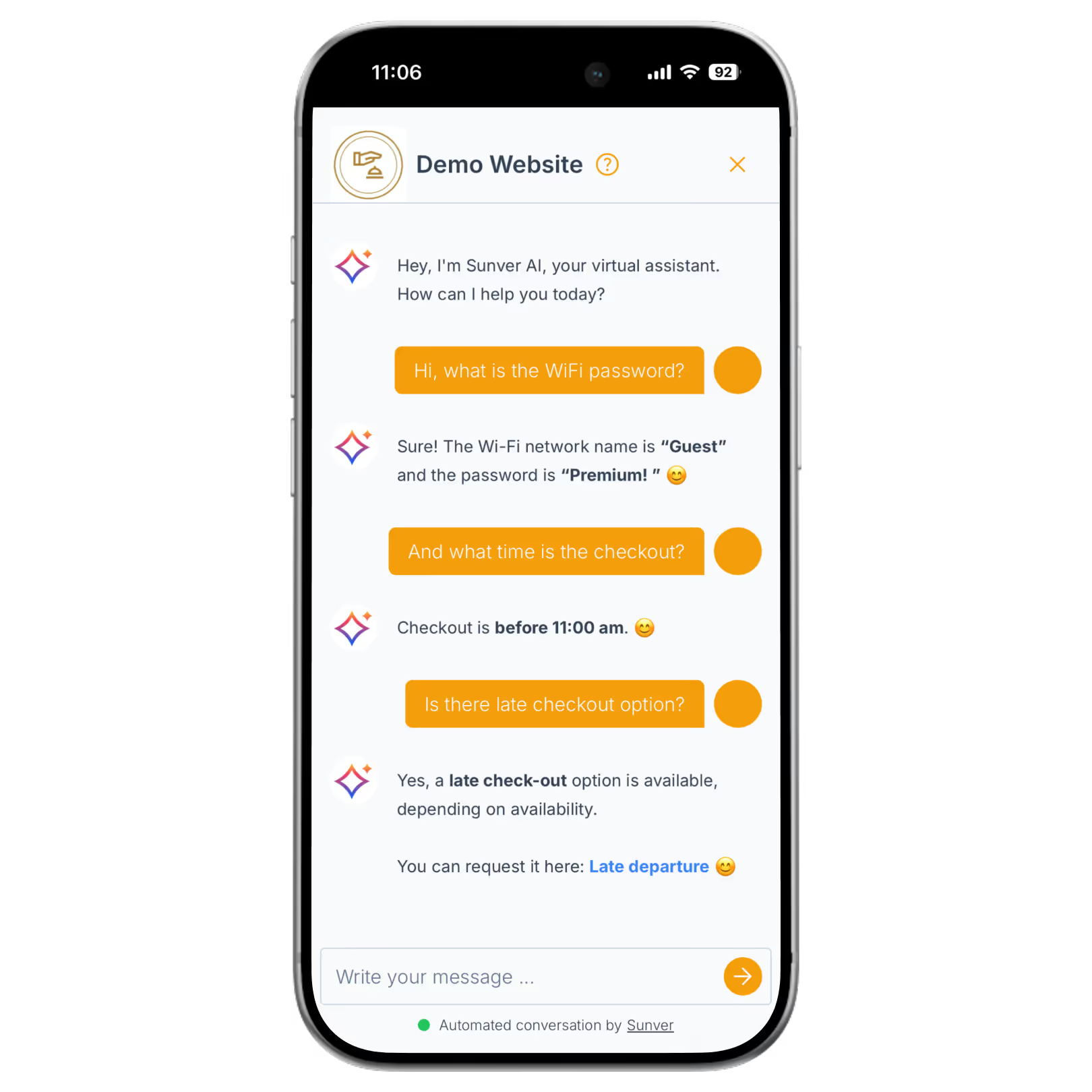
- “What’s the Wi-Fi password?”
- “How does the air conditioning work?”
- “Can we book an activity?”
If the information isn’t immediately accessible, they give up… and send a message instead.
This isn’t a lack of effort , it’s a reflex of efficiency.
The guide is static, not interactive
Today, guests are used to:
- clicking,
- asking,
- booking,
- getting an immediate answer.
A purely informational guide breaks with these habits.
On the contrary, an interactive welcome guide allows guests to:
- ask a question via a chatbot,
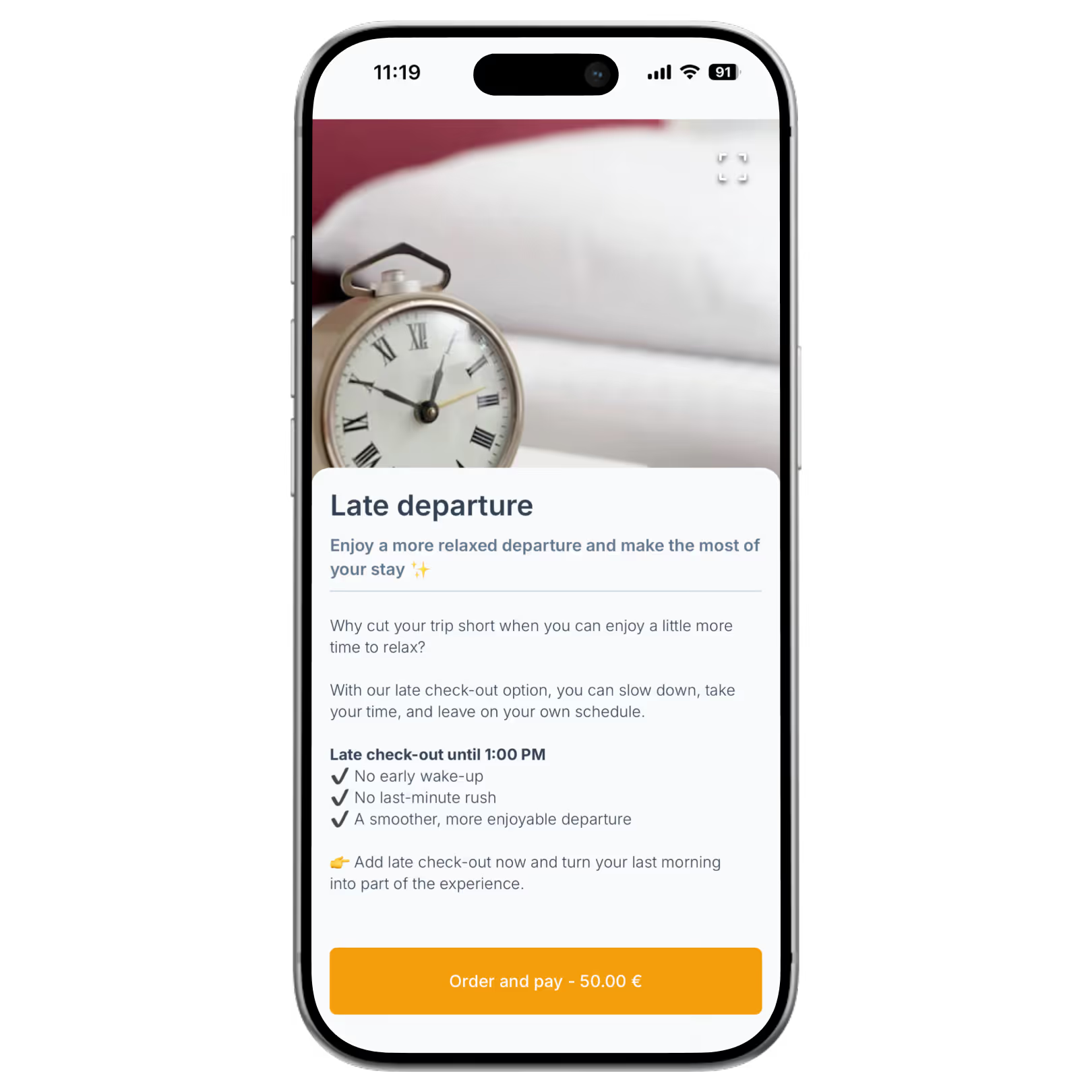
- pay for a service,
- book an activity,
- access dynamic content (videos, maps, geo-located recommendations).
When the guide allows action, it gets used.
When it simply asks guests to read, it gets ignored.
Too much information… or poorly structured information
Trying to say everything is often counterproductive. An effective guide guides the guest instead of overwhelming them. Information should be clearly organized into categories, easy to read, and ideally supported by photos to make navigation intuitive.
A guide that’s too dense:
- confuses the guest,
- hides important information,
- discourages navigation.
The key is not quantity, but prioritization:
- what’s essential,
- what’s useful,
- what’s optional.
The welcome guide doesn’t evolve with the stay
Finally, many welcome guides remain static, while the stay itself evolves.
Yet guest needs are not the same:
- before arrival,
- during the stay,
- before departure.
A truly useful welcome guide must live over time:
- anticipate,
- guide,
- conclude.
Conclusion
If your guests don’t read your welcome guide, it’s usually not a content quality issue, but a question of timing, format and user experience.
An effective welcome guide is not:
- a document to consult,
- nor a long list of information.
It is a living tool, designed to meet real guest needs, at the right moment, in a clear and interactive way.
Solutions like Sunver help go beyond static guides by offering a digital, mobile, multilingual and interactive welcome experience, built to be truly used, not ignored.
Much more than a welcome guidebook
A web application accessible without download, via QR code or link, automatically translated into your guest’s language.
Frequently asked questions
Everything you need to know about Sunver.
What is Sunver?
Sunver is a solution that allows you to easily create your own digital welcome guidebook to simplify communication with your guests. It enhances the guest experience, saves you time every day, and helps you generate additional revenue. Setting up a guidebook is intuitive—similar to creating a Facebook profile.
How do I set up Sunver?
You can create your first guidebook directly from our website in just a few minutes and experience the simplicity of the solution for yourself. If you are a hospitality professional, our team also offers a full demo via video call, helping you with setup and customization.
How can I share my guidebook with guests?
There are two main ways to share your guidebook:
1. Send the link directly after booking or during the stay through your automated messages.Provide
2. QR code displays inside your accommodation so guests can scan and access the guidebook instantly.
You can also print your display for free from your Sunver dashboard or order physical QR code supports directly from our website.
Do my guests need to download anything?
No, your guests don’t need to download anything. Sunver runs as a web app, meaning it’s hosted online, loads quickly, and is instantly accessible. Thanks to automatic translation, the guidebook will open directly in the guest’s phone language.
Can I promote my additional services with Sunver?
Yes, absolutely. With the guidebook modules, you can create a true digital shop and showcase your services, products, or exclusive offers. By connecting your Stripe account, you can accept payments directly without any commission taken by Sunver. Guests can pay in just one click from their smartphone.
The digital welcome guide your guests deserve
Give your guests a seamless experience — all your information, services, and recommendations, right at their fingertips.